GUIDE FOR ORIENTATION


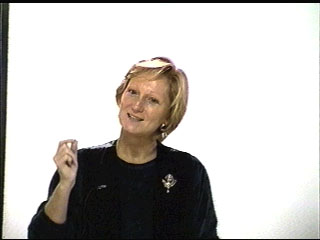
CIS trainer Eva Askew-Houser came from the US to help teach CIS Newfoundland coordinators the basics of CIS team building and program development.


All CIS staff are required to participate in a CIS orientation provided by either the CIS District Coordinator or the CIS Regional Coordinator. Orientation is intended to be a sharing of information and will take place before any CIS staff start working in a school. The following are some standard components of a typical CIS orientation session:


INTRODUCTION


CIS staff will be introduced to one another and identify each others' role in the CIS organization. If time permits a getting to know each other energizer can be included.

CIS PHILOSOPHY AND HISTORY


(An overhead presentation in 16 slides)

CIS - USA and Bill Milliken
Viewing of the promotion video from CIS - USA "Hands need Hands" - 2 minutes
CIS - Canada and Janet Longmore
CIS - Greater Toronto
CIS - Potential Models (Intervention and Prevention)
CIS - Connection with the Port au Port Community Education Initiative
Overview of the Port au Port Community Education Initiative
CIS - NFLD - Year One
Viewing of the CIS video from year one - 6 minutes
CIS - NFLD - Year Two
Viewing of the CIS video from year two - 25 minutes
CIS - NFLD - Year Three

(SEE APPENDICES FOR ALL OVERHEADS USED DURING THIS SECTION)


At this time each new CIS staff member will receive a standard package of information which will include;

CIS Policy Manual (Co-ordinator's Guide)
CIS - NFLD one page (back-to-back) information sheet (Appendices)
CIS - USA "Hands need Hands" brochure
CIS letterhead and business cards for individual CIS site
Copies of CIS videos
Copies of CIS overheads
CIS pin (depending upon availability)
CIS t-shirt (depending upon availability)
CIS pen (depending upon availability)
CIS poster (depending upon availability)


ROLES AND RESPONSIBILITIES


CIS staff will receive information on the existing CIS structure.
CIS staff will be oriented toward what their particular roles and
responsibilities will be within the CIS organization.

Each CIS worker will receive a copy of their expected roles and
responsibilities. All CIS job descriptions will be available in the CIS Policy Manual (Coordinator's Learning Guide)


COMMUNICATIONS


With community - public relations through presentations
With students and families - informal and formal meetings with
students and parents
With principals and teachers - scheduled meetings with principals and
presentations to staff
With CIS District and Regional Coordinators - weekly updates and
reports
With CIS - NFLD network - weekly contact with other CIS staff via
e-mail and Internet WEB board discussions


CIS POLICIES


Review of the CIS Policy Manual and distribution of all pertinent
forms
Completion of Certificate of Conduct application (mandatory)
Completion of all necessary payroll forms


CIS PROGRAMMING


Information of past CIS programs.(See Guide for Content)
Look at past reports from CIS staff
Utilize Learning Guides


COMMUNITY MAPPING


This exercise gets CIS staff thinking and brainstorming about existing
resources in their community. The expected outcome of this exercise is to generate a detailed list of potential resources complete with contact names, addresses and a description of the type of resource it is. This exercise is intended to get CIS staff thinking about how they can best utilize the resources in their community to help young people in need.


CHARACTERISTICS OF A CIS WORKER


This exercise is intended to get new CIS staff thinking about the
personal characteristics needed to make a good CIS worker. This
exercise should only be performed after CIS staff have a clear
understanding of their roles and responsibilities. CIS staff should be
asked to draw what they think a good CIS worker wold look like.


PARTICIPATORY EVALUATION & DO-IT-YOURSELF COMMUNICATIONS


Provide training using the Ryakuga Recipe for Community Television,
Introduction to Participatory Evaluation and Using Video for Data Collection.

PRESENTATION OF CERTIFICATES


"You Survived" certificate for completing first CIS orientation session.


APPENDIX A


OVERHEADS FOR ORIENTATION SESSION


Slide #1 The Four CIS Basics
Every child needs and deserves:
1. A one-on-one relationship with a caring adult
2. A safe place to learn and grow
3. A marketable skill to use upon graduation
4. A chance to give back to peers and the community

Slide #2 Our Mission
To address critical issues facing youth
School Violence Parental Neglect
Substance Abuse Poverty
Illiteracy Marital Breakdown
School Attendance Child Abuse
Job Preparedness Dropping Out

Slide #3 Our Mission
Developing Community Partnerships

Slide #4 Existing Delivery System
Troubled students are being asked to seek out help from a confusing variety of disconnected agencies

Slide #5 Comprehensive Approach
Coordinating the delivery of support services AT

EDUCATIONAL SITES

Slide #6 Benefits of Collaboration
Together we can all help kids with feelings of:
Disillusionment Loneliness
Anger Antisocial Behavior
Crime Despair

Slide #7 Connecting for Kids
The CIS Team
Students
Parents & Community Volunteers
School Principals & Teachers
Police & Youth Justice Workers
Social Service & Health Care Providers
Local Business People
Local Community-Based Organizations

Slide #8 Potential CIS Program Components
Mentoring - School-Based, Community-Based, Intergenerational Mentorship
Help with Literacy - Peer Youth Tutor Clubs, Homework Haven,
Tutoring for Tuition
Enterprise Education - Fast Track to Entrepreneurship
Crime Prevention
Health - Teen Health Corps (peer-to-peer)
Information & Counselling (Intervention & Prevention)

Slide #9 The CIS Solution
Integration & Coordination of Services
Bringing help inside to where the kids are by:
Mobilizing the community
Facilitating coordination & cooperation among existing programs
Partnership Building
Leveraging Resources

Slide #10 Community Education Network
Partnering for Youth

Slide #11 Our Mission
Guided by community education principles, the mission of the Community Education Network is to:


Slide #12 YEAR ONE
St. Stephen's High School, Stephenville, NF
Developing the CIS whole-school model
Partnership building/Relationship building
Specific Programming: Parent Resource Centre
Homework Haven
Peer Youth Tutoring

Public Relations Campaign...What is CIS?

Slide #13 YEAR TWO
Youth Service Canada - CIS Youth Corps
Six school sites in Southwestern Newfoundland
Programs: Fast Track to Entrepreneurship
Breakfast Clubs
Peer Youth Tutoring
Homework Haven
Career Fair
Buddy System (Peer Mentoring)
News telecast Team
Public Relations

Slide #14 "Sharing Our Voices"
Participatory Evaluation
"An evaluation with heart of a process with heart."
Who did we ask?
What did we ask?
What did we find out?

Slide #15 YEAR THREE
Youth Service Canada Proposal 1998 - 1999
CIS Teen Health Corps
Replication of CIS model continued ...
CIS Evaluation continued ...

Slide #16 Together...
We Can All Make A Difference



INDEX